
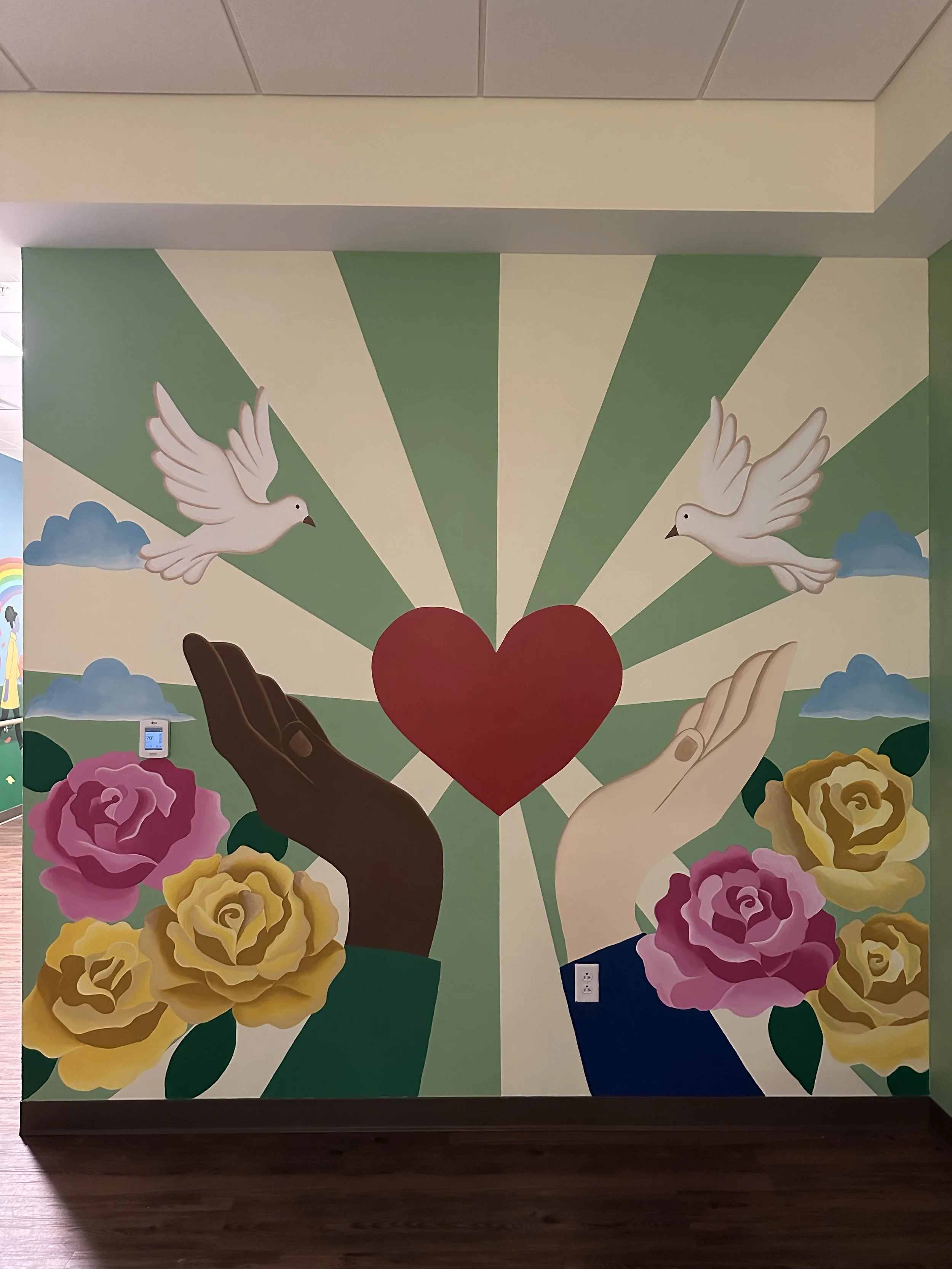
THING 7
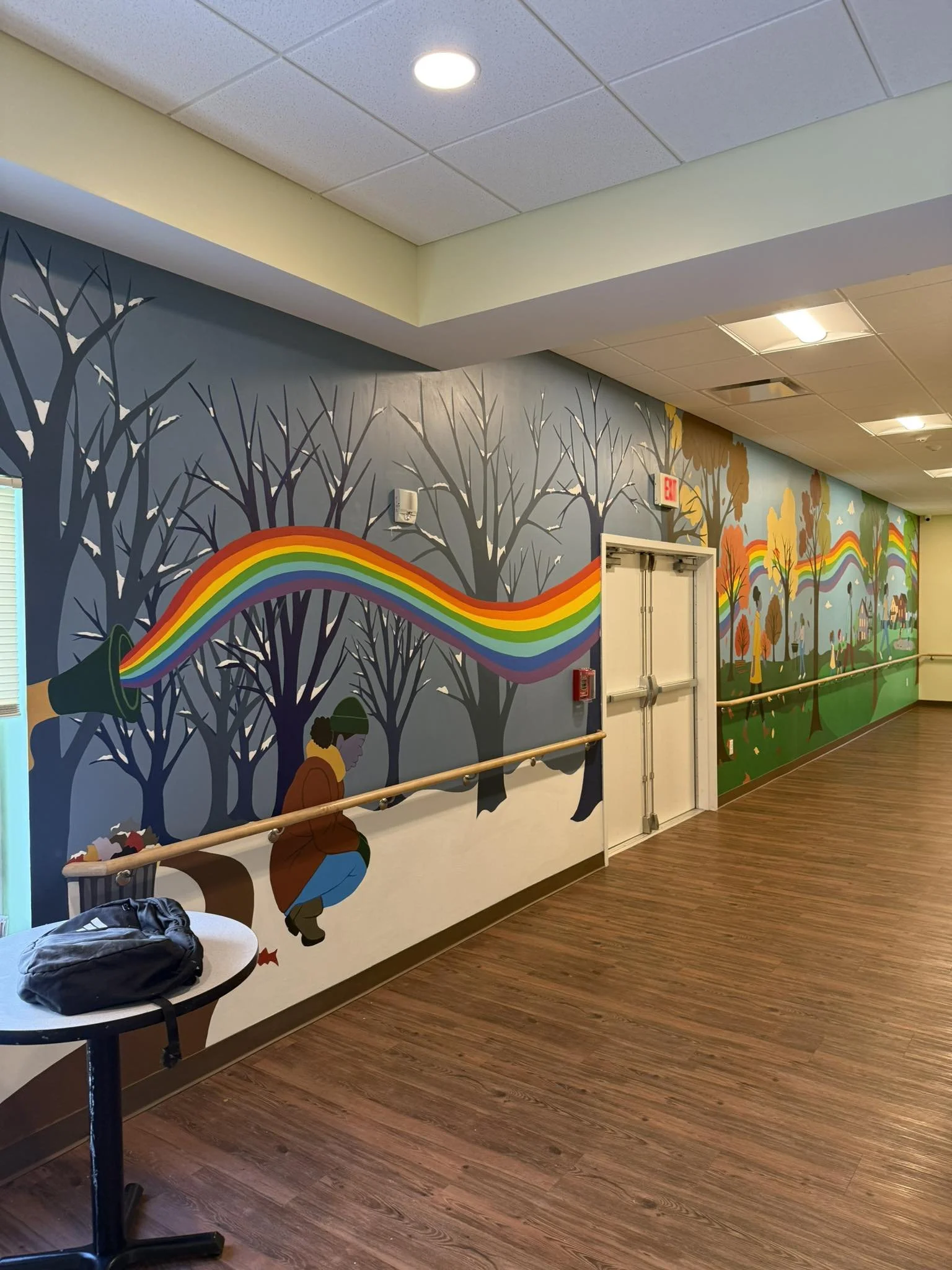
Johnson Park Story Mural
Cornhill (Utica), NY
JCTOD Outreach, Inc., doing business as Johnson Park Center (JPC), is a faith-based nonprofit organization that promotes positive change, revitalization, and community development in the heart of Cornhill, the poorest neighborhood in the City of Utica, New York. JPC provides emergency and supportive housing for women, children, and families, as well as a range of community-based support services in the areas of nutrition, recreation, mentoring, and advocacy. Their programs build hope and empowerment and help individuals become self-sufficient, contributing members of the community.
There are many voices that tell the story of Johnson Park Center and how it came to be, and there are equally many different stories and ways it can be told. With this telling, we start at the beginning, going all the way back to a Johnson Park some wouldn’t even recognize today.
It is there that we first meet Reverend Dr. Maria Scates.
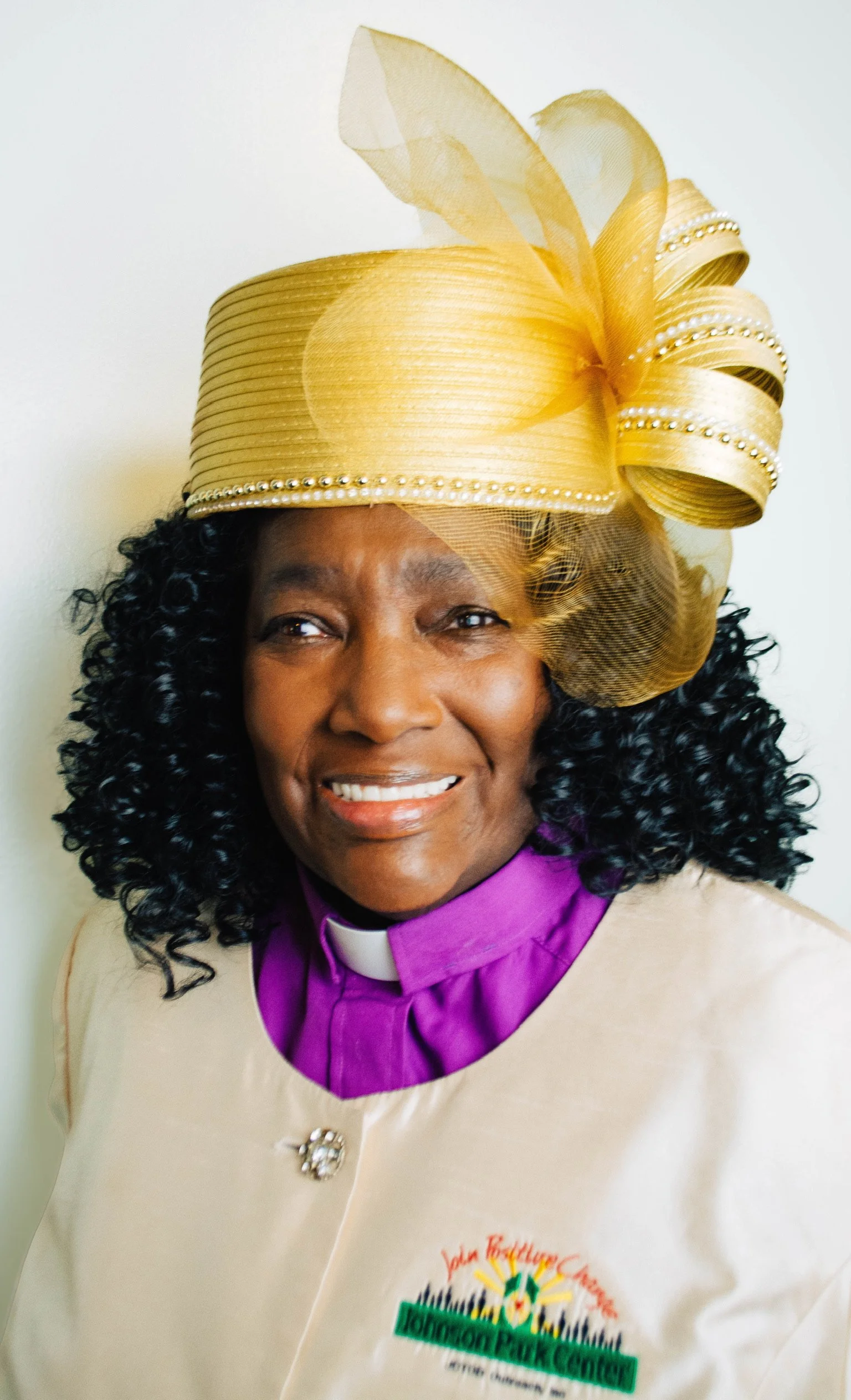
Reverend Dr. Maria Scates
Maria Scates was born on April 22, 1954, in Portsmouth, Virginia. Raised by both parents, Scates grew up in Portsmouth. In 1977, she joined the military. After ending up at Fort Monmouth, New Jersey, Scates got out of the military in February 1981 and returned home to Virginia, where she started a job working in Civil Service. She wouldn’t stay long in Virginia, however, and soon moved to Jersey City, New Jersey.
Unable to afford an apartment in Jersey City on her own, Scates ended up renting with another young woman. She found her way to a church in Harlem, where she met a woman involved in a homestead housing program. Soon after, she left Jersey City for the city and moved in with a friend on 142nd Street in Upper Harlem. Scates later discovered that this friend was an alcoholic. It was through this living experience that she first learned how to navigate life alongside someone struggling with substance abuse.
While still attending the same church in Harlem, Scates met a woman named Wanda who lived in an abandoned building. Scates decided to move in with her and soon became the captain of the homesteading program. Scates and Wanda squatted on the second floor of the abandoned building, and together the two of them ran out the drug dealers and got to work.
Scates quickly learned what it meant to live without a home and what it took to endure the hardship that came with it. Winter proved especially harsh. They used a hot plate to heat water and create steam on the second floor, and they taped garbage bags over the windows for insulation. As captain of the homesteading program, Scates worked with a team and learned how to repair the building. She learned to hang sheetrock and paint, while the city handled the electrical and plumbing work.
While still homeless and learning how to fix up homes, Scates also began training to get her real estate license. Now she wasn’t just homeless and volunteering. She was also a real estate agent.
Winter came and went, and Scates came upon a building on 86th Street in Harlem that had three units. She discovered that the owner was a pastor and that he wanted to sell the first unit. The pastor invited Scates to come to the church and volunteer at the soup kitchen for Thanksgiving.

It was there, in 1984, that Scates first saw a church full of homeless men. Seeing all these people with no home and nowhere to go on Thanksgiving broke her heart. She had the vision of those three Harlem units in her mind, and it was then that the Lord spoke to her and said, “I want you to take care of my people.”
Scates didn’t waste any time.
A Calling Becomes a Mission
Scates moved into the church and began running the food pantry and soup kitchen. A little later, she began working with the staff and volunteers at HARKhomes, a 15-bed holistic sanctuary based in the church basement for homeless men.
With the intention of renovating the homes in Harlem, Scates had the idea to apply for a grant from the Homeless Housing and Assistance Program. She took the initiative and presented the idea, and HARKhomes wrote it up. Together, they got the grant.
To Scates’ dismay, however, without warning or reason, the woman who headed HARKhomes fired her right after the grant came through. Though now unable to help house the people of Harlem through that work, her faith never wavered. Scates was determined to make good on her promise to help the Lord’s people, and whatever it took, she would do just that.
In 1998, Scates attended Pine Crest Bible School in Salisbury Center, New York. It was there she met Mr. and Mrs. Polivka. Upon her graduation in 1991, the couple sponsored Scates to go to Jamaica on a mission trip. She returned to Jamaica on another mission trip in 1992, and in 1993 she went to Russia for a year on yet another mission.
When she came back in 1994, Mr. and Mrs. Polivka opened up their home to her. They talked about opening a Bible school in Russia, but Scates felt called to go into the inner city and do the Lord’s work there. She thought of Albany, but then Mr. Polivka told her about Utica. He explained that the inner city community needed a great deal of help. He told Scates there was a “housing project” where Russians and African Americans lived in Utica, and spoke of the widespread racial tension in the area.
Arriving in Utica
In September 1995, Scates, formerly a homeless veteran, came to Utica, New York, and asked people where the worst area in the city was. They said Cornhill, and it was there she went.
At a meeting in Herkimer County, Scates shared news of her new venture into Cornhill-Utica. There she met Ms. Cathy Mallace, who had lived in Cornhill-Utica all her life. Mallace warmly welcomed Scates to the community and offered to take her on a tour through the neighborhood.
On this tour, Scates saw a desperate need for change. At the time, the Johnson Park-Cornhill community was considered one of the worst neighborhoods in Utica. But Scates didn’t just see poverty, crime, drugs, and gangs. She saw the potential for beauty and positive change around every corner.
At the end of the tour, they drove into Johnson Park, where Ms. Mallace had played as a little girl. Instead of urban decay, Scates heard children laughing and saw them running and playing in a beautiful neighborhood. She was looking for a large house where she could live, start a church, and open a nonprofit outreach center, a work of love for the people of the Cornhill community.

At 26–28 Johnson Park, she found exactly what she had been searching for, the very same place she had seen in her dreams.
A few days later, Scates met with the managing agent of the property and told him about her plans for the church, the nonprofit outreach center, and a place to live and work. That same day, he handed her the keys to the house.
Scates signed the deed for the properties on November 14, 1995, exactly two months and one day after her return from Russia. On that same day, she moved into the third floor with a bed, a few household items, and some missionary school equipment.
She then became the founder and first Chief Executive Officer of JCTOD Outreach, Inc. To this day, Scates continues to serve in this role as a full-time volunteer.
A fire had taken place on the second floor before Scates moved in, nearly burning out the whole floor. That burned-out floor would later be restored as Scates built hope and love back into what had once been a major drug house.
“Positive Change Is Coming to Johnson Park!”
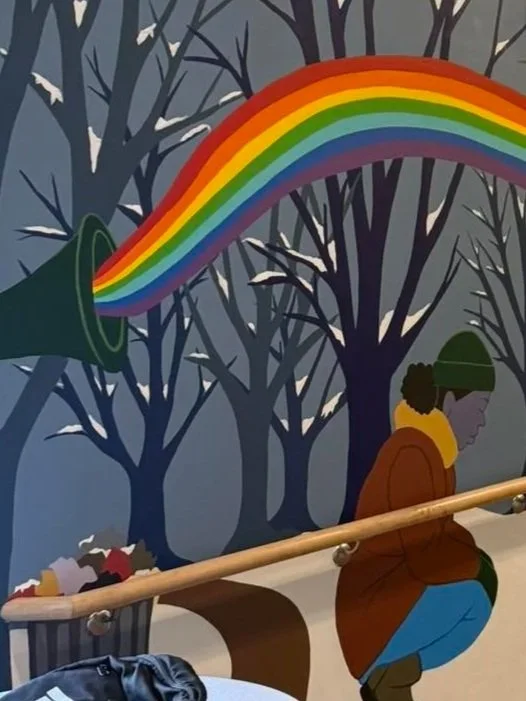
Scates started by picking trash up off the streets and walking around with bullhorns and a megaphone shouting, “Say no to drugs,” and “Positive change is coming to Johnson Park!”
She went to every government program available in the county at that time. Scates used the knowledge she had acquired from the homesteading program in Harlem and applied it in Utica. She invited Joe Howling, housing director of New York State, to come to Utica, and she shared with him what she envisioned for the neighborhood.

The year 1996 was a big year for JCTOD:
To help needy families fight hunger and food insecurity, JCTOD opened a Food Pantry at 26 Johnson Park.
Two months later, they opened a neighborhood basketball playground.
The Oneida County Youth Bureau gave JCTOD its first Youth Program Grant.
That September, JCTOD received a City of Utica HOME grant for the renovation of 1402 and 1404 West Street.
In October, they were awarded a grant from the New York State Housing and Homeless Assistance Program (HHAP), the City of Utica, the Enterprise Foundation, and the Community Foundation to develop Permanent Supportive Housing for low-income homeless women and families with special needs.
In December, JCTOD opened its transitional housing program and Workforce Development program through a start-up grant from the Community Foundation.

In 1997, JCTOD opened a transitional housing program for women with substance abuse and mental health disabilities who desired to be reunited with their children at 1402 West Street.
The list of milestones and awards for their outstanding service to the Johnson Park community goes on.
Reverend Ursula Meier
Reverend Ursula Meier, Johnson Park Center’s Chief Operations Officer, was born on July 12, 1967, in Kestenholz, Switzerland, and it was in that small village that she grew up.
Meier experienced early childhood trauma. She struggled with dyslexia and, at age five, almost died from meningitis. As she got older, she developed a passion for baking and spent her teenage years training as a baker and pastry chef.
Meier later began to struggle with substance and alcohol abuse, and by age 19 it was taking over her life, prompting her to leave home and seek treatment. At that time, there was little diagnosis or recognition of mental health struggles, and most psychiatrists viewed mental illness as an incurable condition that could only be treated with heavy psychiatric medication.
The medications Meier’s psychiatrist put her on had severe side effects. She lost the use of her arms and developed a constant shaking syndrome. Meier hit rock bottom and knew she needed real help through rehabilitation, but her psychiatrist refused to sign the papers necessary for her to enter rehab.
Fortunately, Meier had a good friend who advocated for her and eventually found her a rehabilitation program.
For the next two and a half years, Meier lived first in a residential facility, then in a halfway house, and eventually in independent living. During the time she was in rehab, HIV hit the scene, and half the people there were leaving with what felt like a death sentence.
Now on her own, Meier realized she carried a deep longing to travel. She was making plans to explore far-off places when her boyfriend proposed marriage. Knowing she had to answer the call to see the world, Meier refused his proposal.
She learned English and set off on a journey to satisfy her wanderlust. When she got to England, she received a call that her boyfriend had overdosed and died. She began to think deeply about her own mortality and how she wanted to live the rest of her life.
She continued traveling through Scotland and Ireland and eventually returned to Switzerland with a heavy heart, but also with a fresh new perspective. Meier now knew there were other ways of being in the world.

A Life of Service
When Meier returned to Switzerland, she knew she wanted to be of service and help others in need. She first went to Zurich to work with homeless men, and from there went on to work with nuns at a children’s home. Meier began dedicating her life to God and became committed to serving others.
She entered the field of social work, but soon felt called to pursue a degree that would allow her to become a missionary. Her dream was to go to India, and America was the very last place she imagined she’d end up.
By this point, Meier had completed her degree as a pastry chef as part of her second level of education, and went on to receive higher education in Social Pedagogy. She was preparing to leave Switzerland for the jungles of Peru to visit friends and get a sense of missionary life. She had planned a three-month trip.
In the meantime, Meier had written a letter to her mentor, a missionary named Linda Sutter, who lived in Wisconsin. Sutter was someone Meier deeply admired. The original plan was for Meier to visit Sutter in Wisconsin, then head to Nepal to see the Machu Picchu mountains, and later continue on to Peru.

But three days before leaving for her three-month journey, Sutter told Meier that Pine Crest Bible Training Center in New York was offering a one-year scholarship.
Meier felt called by God and had enough faith to change direction entirely.
She canceled her trip to Nepal and Peru, headed to Wisconsin to visit Sutter, and then answered the call to attend Pine Crest Bible School. After visiting with Sutter, she took a long Greyhound bus ride to Utica, New York, and from there was given a ride to Salisbury Center.
That Sunday, Meier went to church and felt God reassure her that Pine Crest was exactly where she was meant to be.
And so she stayed in the United States and enrolled.
Finding Johnson Park
This region was not only a culture shock for Meier. It was also a sacrifice.
Back home in Switzerland, she still had an apartment, but in order to stay in the United States she had to give up everything, including her health insurance. She ran out of money quickly. Her clothes and shoes wore out, and she even lost teeth because she could not afford dental care.

Then the day came when Pine Crest sent students on a one-day internship to help Reverend Dr. Scates at 26 Johnson Park.
Having come from a wealthy European country, Meier was stunned when she first encountered the poverty and violence in Cornhill and the Johnson Park neighborhood. Crack addiction had affected generations, and the damage was everywhere.
In 1998, following her internship and training at Pine Crest, Meier felt called to return to Johnson Park.
There was no salary when she arrived to work at JPC under Scates’ leadership. Though this worried her, Scates reassured her, “The Lord will provide.”
Alongside Scates, Meier ran the youth center for the first 15 years of her time at JPC. Back then, JPC was entirely volunteer-based. Meier and Scates lived together on the third floor at 26 Johnson Park, and the two of them got by with very little as they worked to develop and serve the neighborhood around them.
Meier didn’t know how to work the shower system and simply assumed everyone took cold showers. It wasn’t until after a full year of cold showers that someone finally showed her how to turn on the hot water.
Now estranged from her family and living in the United States, Meier did not adjust overnight. She received news from Switzerland that her mother had passed away. Longing to see her father, she grew even more homesick, but she knew the JPC community needed her to stay.
Her work with the agency wasn’t the only thing keeping her from returning home. Visa issues meant she couldn’t simply come and go as she pleased, and so she continued serving under Scates, pouring her energy, faith, and devotion into helping lead the development of JPC.
Because her English was still developing and American culture remained unfamiliar, those first years were some of the hardest. But she was supported by people around her. Three seniors and a school teacher from the 1300 West Street block embraced and helped her in many ways. Volunteers like Ms. Wolfe, Ms. Grenicko, Ms. Jackson, and Mr. Crossly became an important part of Meier’s foundation at JPC.
It was a rough road for a while, but Meier felt purposeful, assured, and supported by the JPC community and in her work.

The Food Pantry and a Growing Legacy
A firm believer in Maslow’s Hierarchy of Needs, and with her background as a baker and pastry chef, Meier naturally took to running the Food Pantry.
Over the years, Meier’s creative thinking allowed the food pantry to change and adapt with the times. What began by serving 15 households per month eventually grew to serving 4,803 households per month. During this time, a drive-thru pantry system was also developed so people could safely receive food during the pandemic.
Under the leadership of Scates, Meier felt her calling outgrow her desire to return home to Switzerland. She felt it was a privilege and an honor to serve the JPC community under Scates, and she felt free to do the Lord’s work in the way she was called to serve.

One woman, a former drug dealer and ex-convict who had lost her house while in prison, came to JPC after being released. She recalled Meier giving her a big hug as she sobbed, having never before grieved the loss of her mother. She remembers Meier saying:
“I’m going to love you until you love yourself.”
That woman later volunteered at JPC from 2010 to 2016, was hired onto staff in 2017, and still works at JPC today.
This is just one of many JPC success stories, stories of women who were able to rebuild and rehabilitate their lives through support, care, and opportunity.
It wasn’t until 2023, 25 years later, that Meier finally returned home to Switzerland. What she found when she visited her family and her old apartment was that it was no longer home. It was a bittersweet return, but it gave her the closure she needed to say goodbye to her old life in Switzerland and fully embrace Utica, New York, and the United States as her true home.
The Growth of Johnson Park Center
And so the work of Scates and Meier continued, and with it the growth and development of the Johnson Park-Cornhill community and JPC.
Milestones in Growth and Service
April 2001: With the help of Cornell Cooperative Extension of Oneida County and farmers in the Watertown area, JCTOD opened the Let’s Grow Community Garden at 1409–11 West Street, where children could grow their own fruits and vegetables to take home.
2003: After many years of project development, JCTOD opened Johnson Park Apartments at 19 Johnson Park. What was once a former drug house became home to six units of Permanent Supportive Housing.
2004: JCTOD opened Oneida County’s first family shelter, where traditional and non-traditional low-income families could be referred by the Oneida County Department of Social Services and remain together during a crisis.
January 2007: JCTOD received a grant from the NYS HHAP, the City of Utica, and Enterprise Community Partners to create eight one-bedroom and efficiency units of permanent supportive housing for chronically homeless women without children whose primary disability was mental health related.
February 2008: JPC was designated a Community Housing Development Organization, and through a grant from the City of Utica HOME Program, JPC purchased 1420 West Street and 210–212 Arthur Street. This was a major victory, as drug dealers, slumlords, and gang leaders no longer occupied that corner.
December 2009: Working in partnership with Hage & Hage, Green Leadership in Energy and Environmental Design (LEED) Consulting Services, and C. Lewis Tomaselli Architects, JPC received a planning grant from the Community Foundation to create and develop the JPC Green Community Project Master Plan, which included a Multi-Purpose Childcare & Family Center, the Energy Technology & Maintenance Facility, and a vision for all JPC properties to become Green LEED Certified.
January 2015: The Head, Hand & Heart Family Enrichment Program opened, an early childhood development program that gives children ages 3–5 the opportunity to learn and grow in a safe, supportive environment and provides children from low-income households a chance at a brighter future.
May 2015: JPC’s Food Pantry reached 1,000,000 meals served.
Fall 2024: JPC completed the Johnson Park Green Living Apartments and Community Center. Consisting of four buildings — a 51-unit building, a 2-unit building, a 9-unit building, and a community center — these apartments have served many families and individuals in need, including those living with mental health challenges and disabilities, those seeking a safe place to continue recovery, and older adults in need of housing with daily living assistance.
Located at 1402 West Street and open three days a week, the JPC Food Pantry provides enough food to help sustain households throughout the month. Each household can visit up to twice per month, and evening hours help meet the needs of working families.
JPC is an official food distribution site registered with the Food Bank of Central New York. The pantry offers an open door to self-sufficiency and access to nutrition, helping the “working poor” support their mental and physical health so they can care for their families and function more fully in society.
A Legacy of Love, Faith, and Direct Action
With no more than a vision in her mind and faith in her heart, Reverend Dr. Maria Scates raised up hope, love, and healing in a community that had been abandoned and left in crisis. With her determination and trust in the mission, Scates was exactly the leader the Johnson Park-Cornhill community needed, and her strength paved the way for other leaders to follow.
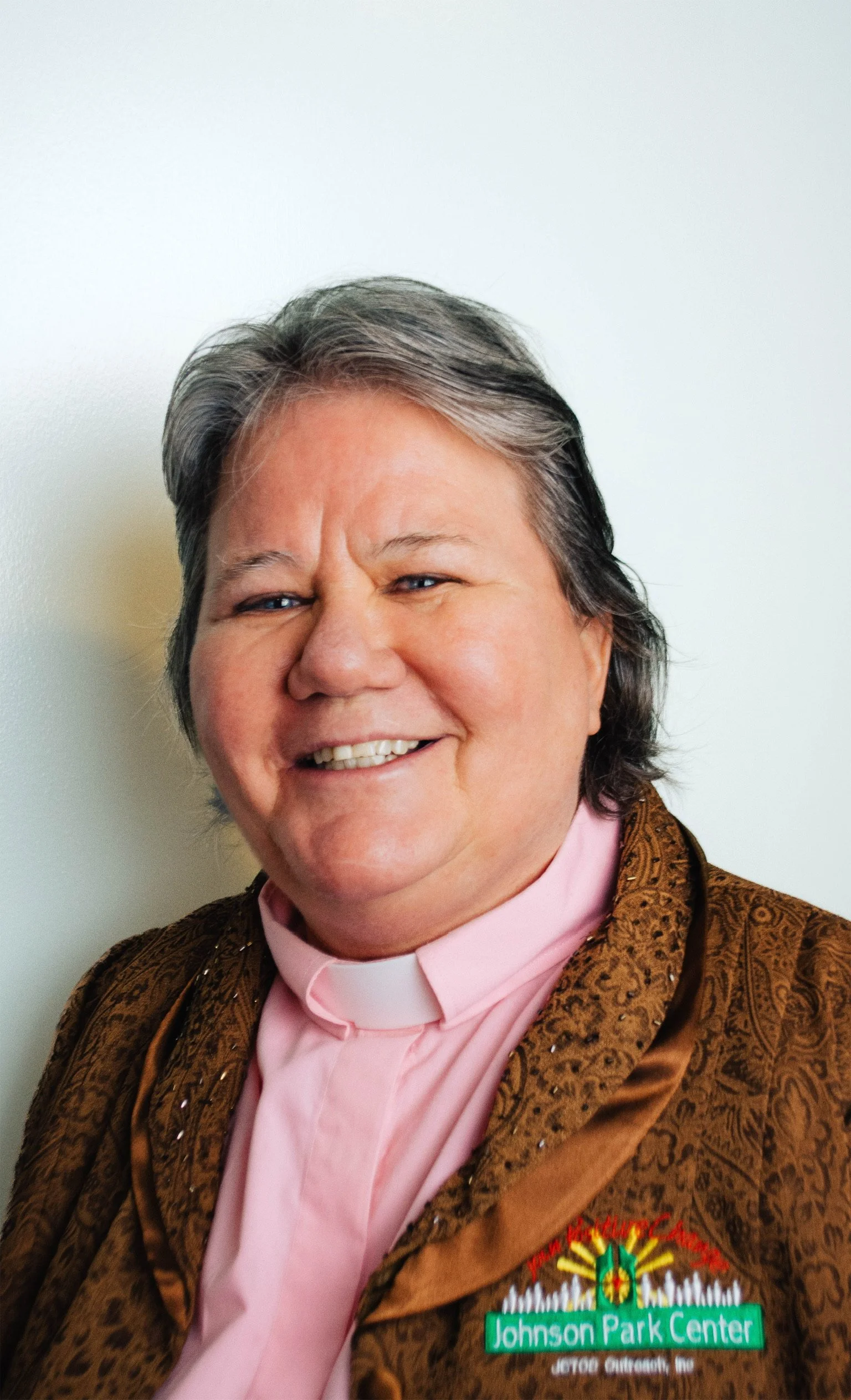
Reverend Ursula Meier, once a stranger in this land, had some very big shoes to stand beside in her leadership role at JPC. Meier allowed her own faith, as well as her faith in Scates, to guide her path of helping people and serving the Johnson Park-Cornhill community. It made her a stronger leader every day she chose to stay, no matter the challenge.
The adversity faced and overcome by both of these women, and their ability to turn hardship into the greatest power of all, love, is nothing short of extraordinary.
Their continued commitment to expressing love and gratitude through direct action is rare. These women do not simply look to help people. They fight for people. They go the extra mile and beyond to help others make the changes they need to heal and live a better quality of life for themselves, for their families, and for those around them.
Thanks to all the volunteers over the years who have walked, and continue to walk, in the footsteps of these women, and to all the staff at JPCwho make valiant efforts to serve those in need and help the Johnson Park-Cornhill community shine brightly with love and positive change.
The mission of JPC began with the vision of one woman, and it continued to thrive through the perseverance of another.
But it takes a whole community to keep fighting the good fight for positive change, to serve, and to lift one another up day after day.
Thank You to all the sponsors
None of this would have been possible without support from the following:






Friends & Supporters
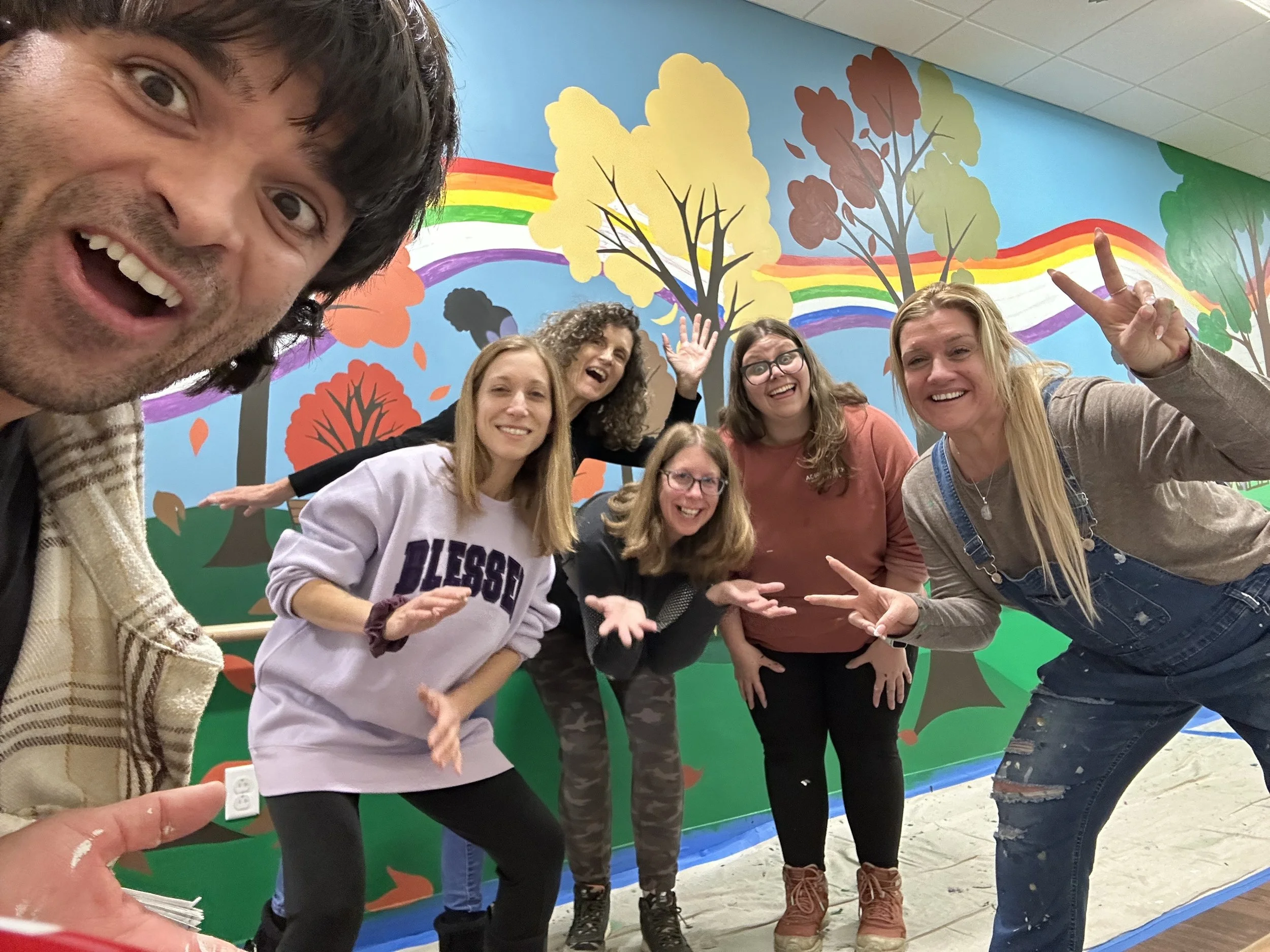
Artwork Brought to Life by

Meet the JPC Mural Lead Artist: Angela DeCarlis
Angela DeCarlis is a New York-based artist and muralist who creates large-scale work designed to connect people more deeply to a space, and to themselves within it. Her murals are rooted in story, presence, and the experience of the environment, with each project shaped by the people, purpose, and feeling behind it. From concept through completion, she brings creative vision, leadership, and a strong sense of how to create work that doesn’t just stand out visually, but actually means something to the people who live with it.
Learn more about Angela and her work at belife.us or on Facebook
Want to Bring an Art Thing to Life in your neighborhood?
Are you an artist, organization, or community group interested in bringing a public art project to life in your own neighborhood? The Art Thing would love to help support that process! From early ideas to gathering people, resources, and momentum. Reach out and let’s make someTHING together.